It’s Black Friday, something unusual happens on Amazon.
38% of all shopping sessions involve Rufus, Amazon’s AI agent. Not a chatbot. Not a search bar. An AI that shoppers talked to like a knowledgable friend.
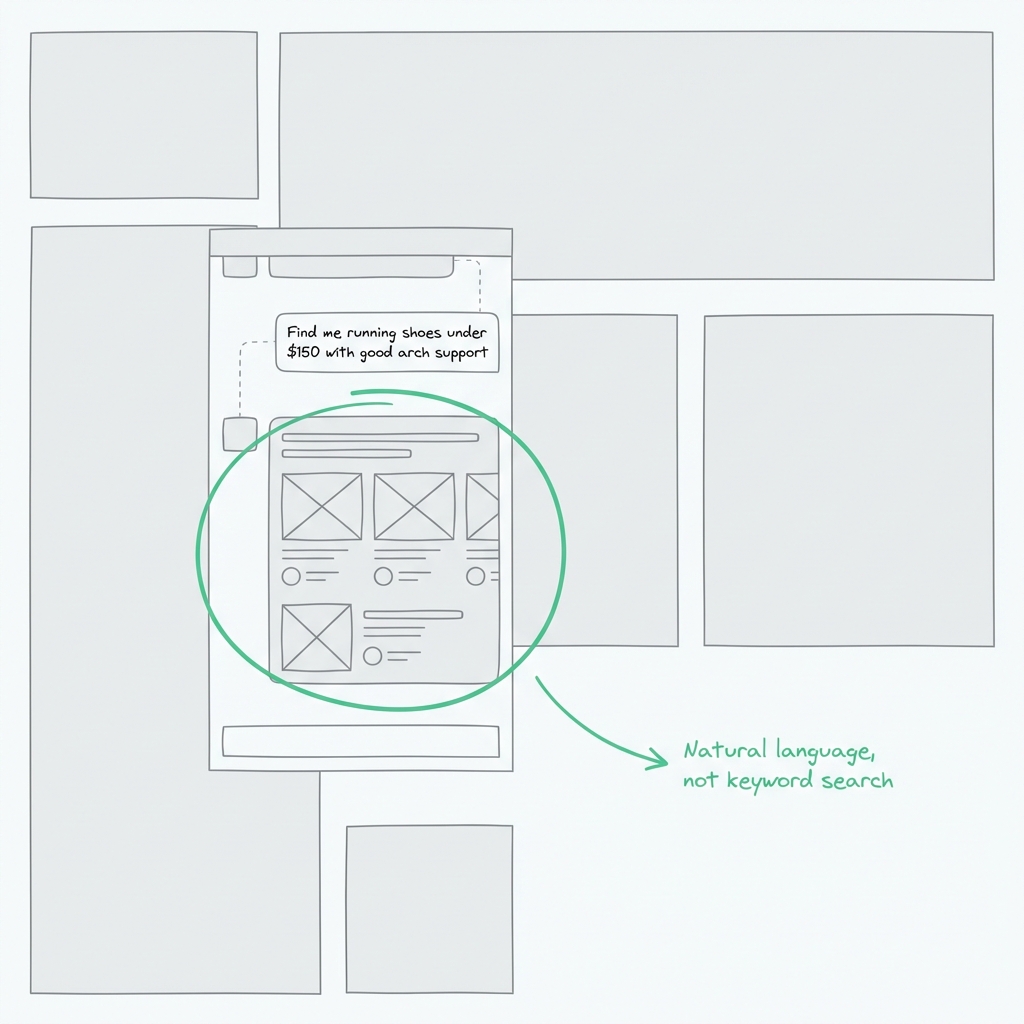
“Find me running shoes under $150 with good arch support that will arrive by Friday.”
Rufus doesn’t just list results. It compares options, checks reviews, verifies shipping times, and recommends three specific pairs. Shoppers who uses it are 60% more likely to complete a purchase.
This is what AI agents look like in action. Actual technology reshaping how people buy things online.
If you run a Shopify store, understanding how these systems work isn’t optional anymore. This guide breaks down the technology in plain terms.
AI Agents Defined
An AI agent in e-commerce is software that perceives its environment, reasons about goals, plans a sequence of actions, and executes those actions autonomously to complete shopping-related tasks on behalf of users or merchants.
That’s the technical definition. Here’s what it means in practice.
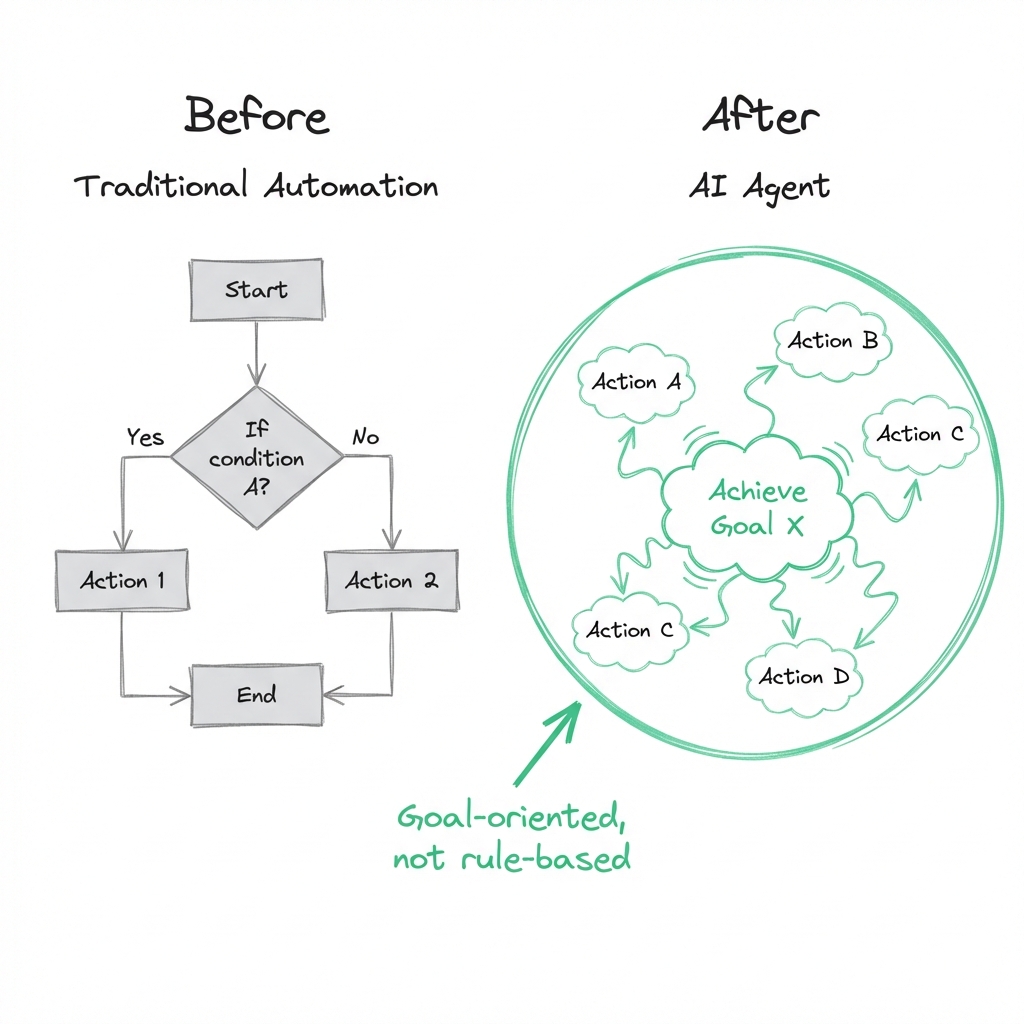
Traditional software follows rules. If customer asks X, respond with Y. If inventory drops below Z, send alert.
AI agents work differently. They receive a goal and figure out how to achieve it.
| Traditional Automation | AI Agents |
|---|---|
| Follows predetermined rules | Pursues goals independently |
| Handles planned scenarios | Adapts to unexpected situations |
| Requires specific programming | Learns from context and feedback |
| Responds to triggers | Takes proactive action |
When a customer asks an AI agent “help me find a birthday gift for my sister who likes hiking,” the agent doesn’t search for keywords. It reasons about what hikers need, considers price ranges for gift-appropriate items, checks what’s in stock, and presents curated options.
The difference isn’t just technical. It changes what these systems can accomplish.
The Five Core Components
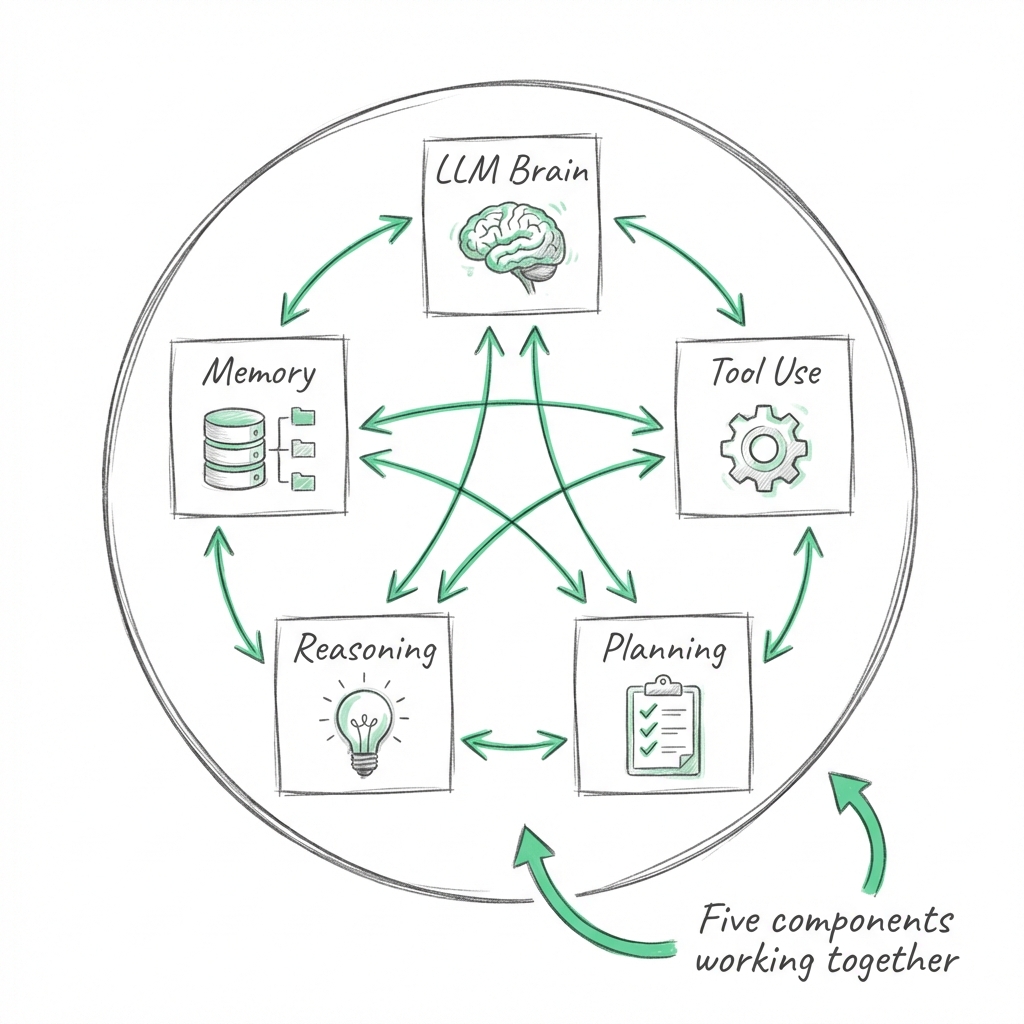
Every AI agent relies on five interconnected components. Understanding these helps explain what agents can do and where they struggle.
The LLM Brain
At the center sits a Large Language Model (LLM). GPT-4, Gemini, Claude, and similar models serve as the reasoning engine.
The LLM processes natural language. It interprets customer requests, understands context, and decides what to do next. Think of it as the coordinator that orchestrates everything else.
Without the LLM, an agent is just a collection of tools with no intelligence connecting them.
What the LLM handles:
- Understanding customer intent
- Deciding which tools to use
- Generating natural responses
- Breaking complex requests into steps
Tool Use
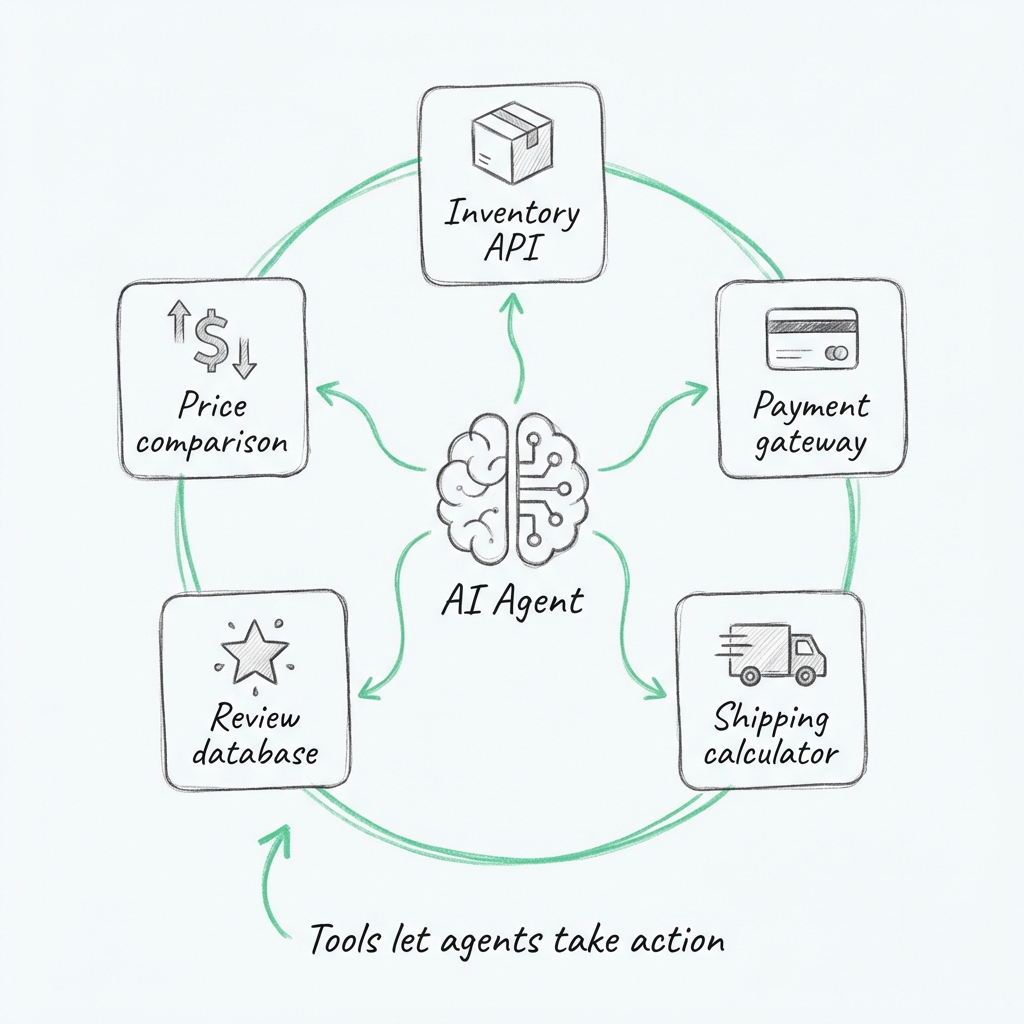
Tools extend what the agent can do beyond conversation.
An AI agent without tools can only talk. With tools, it can act. Tools connect the agent to external systems through APIs, database queries, and web interactions.
Common e-commerce tools:
- Inventory lookup
- Price comparison across sources
- Order placement and tracking
- Review aggregation
- Shipping calculation
When Amazon Rufus checks if your size is in stock, that’s tool use. The LLM decided to check inventory, called the appropriate API, and incorporated the response into its answer.
 payment gateway, shipping calculator, and review database” width=”1024″ height=”1024″ srcset=”https://blogmedia.adfinite.com/wp-content/uploads/2026/01/ai-agent-tools-diagram.jpg 1024w, https://blogmedia.adfinite.com/wp-content/uploads/2026/01/ai-agent-tools-diagram-300×300.jpg 300w, https://blogmedia.adfinite.com/wp-content/uploads/2026/01/ai-agent-tools-diagram-150×150.jpg 150w, https://blogmedia.adfinite.com/wp-content/uploads/2026/01/ai-agent-tools-diagram-768×768.jpg 768w, https://blogmedia.adfinite.com/wp-content/uploads/2026/01/ai-agent-tools-diagram-96×96.jpg 96w” sizes=”(max-width: 1024px) 100vw, 1024px” />
Planning
Planning is how agents break goals into achievable steps.
When a customer says “order party supplies for Saturday,” the agent doesn’t immediately place an order. It creates a plan:
- Clarify what supplies are needed
- Check availability for Saturday delivery
- Compare options within budget
- Present recommendations
- Upon approval, complete checkout
This planning capability separates agents from simple chatbots. Chatbots answer the current question. Agents think ahead.
Reasoning
Reasoning is the decision-making layer.
Should the agent recommend the cheaper option or the one with better reviews? Should it wait for customer input or proceed with the obvious choice?
These judgment calls happen through reasoning. The LLM evaluates available information, applies logic, and reaches conclusions.
Reasoning in action:
- Noticing a product has recent negative reviews about shipping damage
- Recognizing that a customer’s past purchases suggest preference for premium brands
- Understanding that “something like last time” refers to a previous order
Memory
Memory enables personalization and context.
Short-term memory maintains conversation context. The agent remembers what you discussed thirty seconds ago.
Long-term memory stores information across sessions. Purchase history, preferences, past issues. This is often powered by RAG (Retrieval-Augmented Generation), which lets agents access stored knowledge without retraining the model.
A customer returning after three months shouldn’t have to explain their preferences again. Memory makes that continuity possible.
The Agent Loop
AI agents operate in a continuous cycle. This loop runs constantly, not just when triggered.
1. Perceive
The agent gathers information. Customer messages, inventory data, market signals, past interactions. Everything relevant to the current goal.
2. Reason
Processing begins. The LLM analyzes the situation, identifies what matters, and considers options.
3. Plan
The agent creates a sequence of actions. What should happen first? What depends on what? What are the fallback options?
4. Act
Execution. The agent calls tools, sends messages, triggers workflows. Actual changes happen in the real world.
5. Learn
Feedback enters the system. Did the action achieve the goal? Should the approach change? This information improves future performance.
Then the cycle repeats.
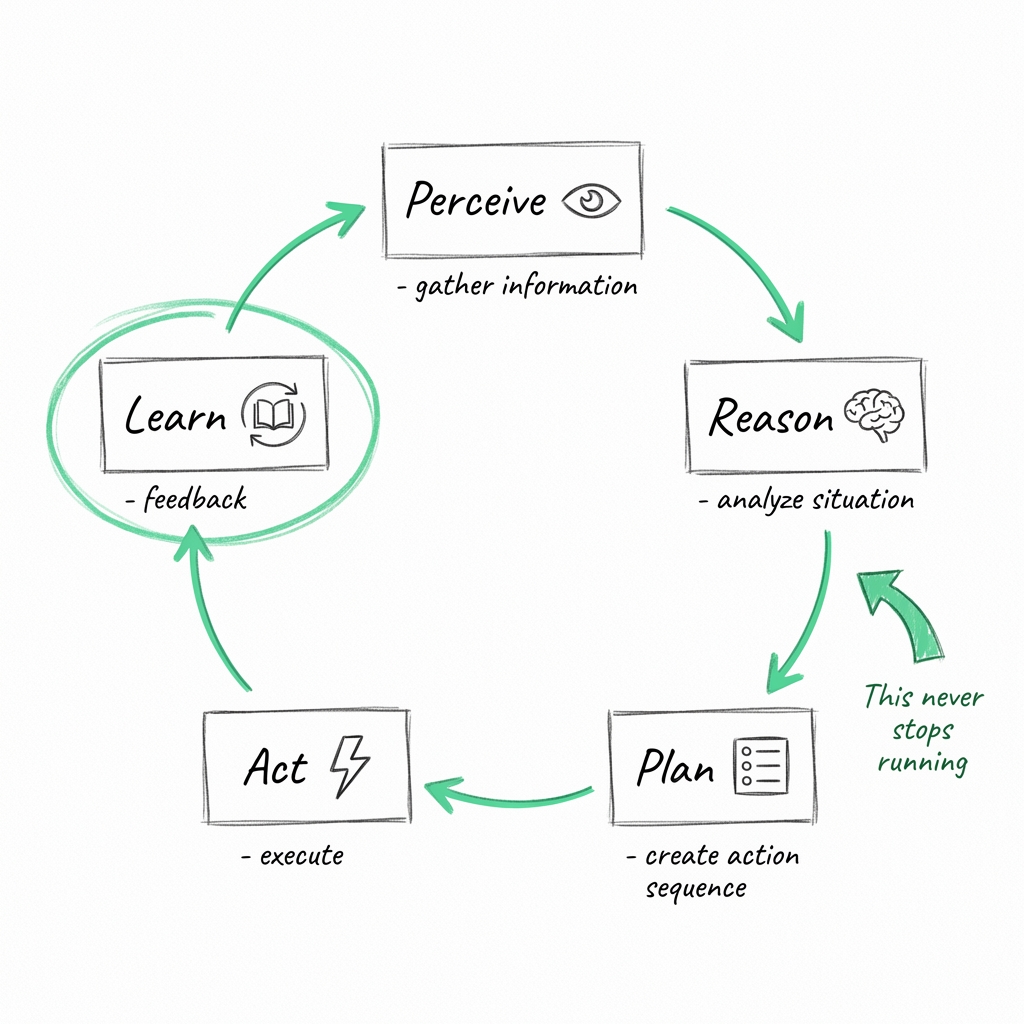
Traditional automation runs when triggered. AI agents run continuously, adjusting as circumstances change.
A pricing agent doesn’t wait for you to ask about prices. It monitors competitor pricing, inventory levels, and demand signals around the clock. When conditions warrant a change, it plans the adjustment, executes it within your guardrails, and tracks the results.
AI Agents in E-commerce: Where They Work
According to industry data, 77% of e-commerce professionals now use AI daily, up from 69% in 2024. By end of 2026, Gartner projects 40% of enterprise applications will include task-specific AI agents.
Here’s where they deliver measurable results.
Customer Service
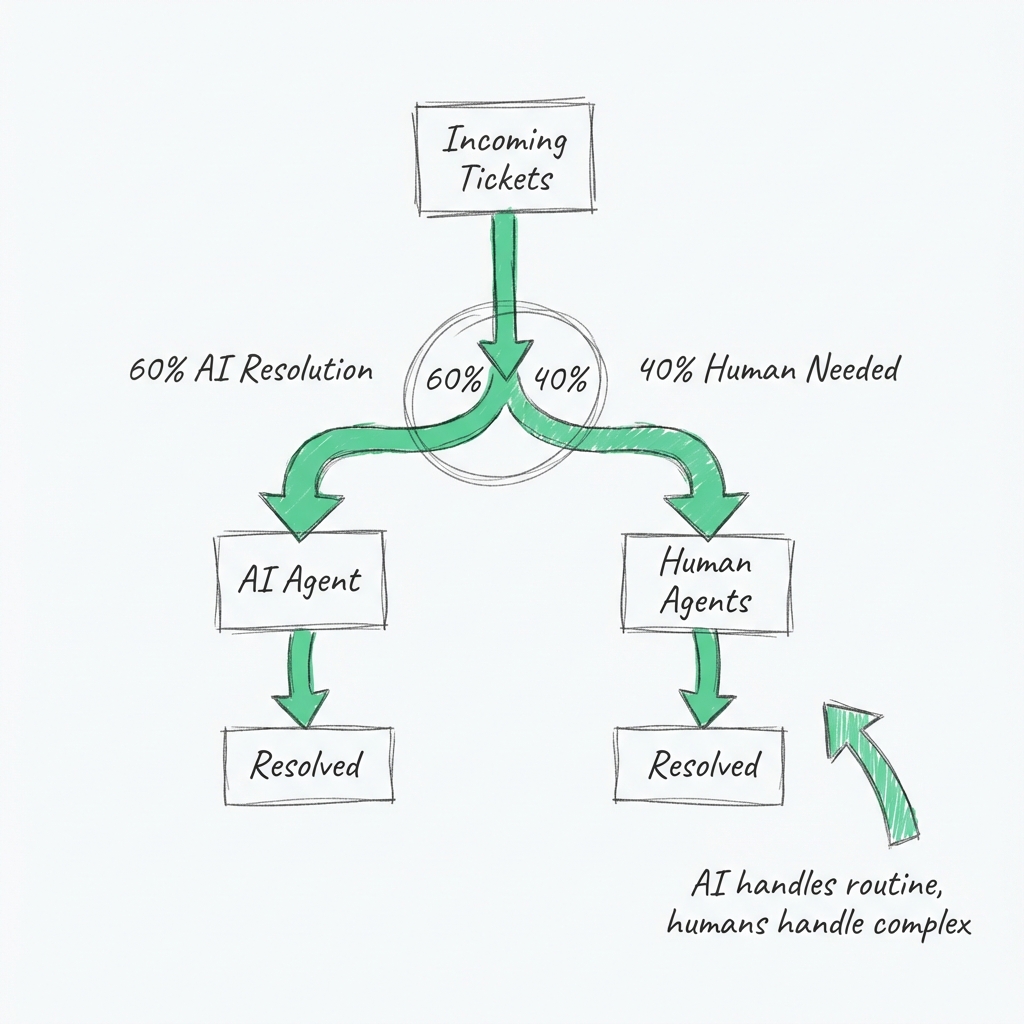
AI agents handle routine support inquiries: order status, return requests, product questions, sizing guidance.
Typical results:
- 40-60% reduction in support ticket volume
- Response time from minutes to seconds
- Maintained or improved satisfaction scores
Engaige, a Shopify-focused tool, reports resolving up to 80% of support tickets without human involvement. Rep AI claims a 40% reduction in support team workload.
But the key word is “routine.” Complex emotional situations, unusual problems, and high-stakes issues still need humans.
Inventory Management
AI agents predict demand by analyzing sales patterns, seasonal trends, competitor actions, and external factors.
Shopify merchant Doe Beauty reportedly saves $30,000 weekly using AI-driven inventory tools. Prediko’s AI solution helps Shopify stores reduce stockouts through 12-month forecasting.
What inventory agents do:
- Predict demand before it happens
- Suggest reorder quantities and timing
- Flag slow-moving items for promotion
- Adjust for seasonal patterns automatically
Personalization
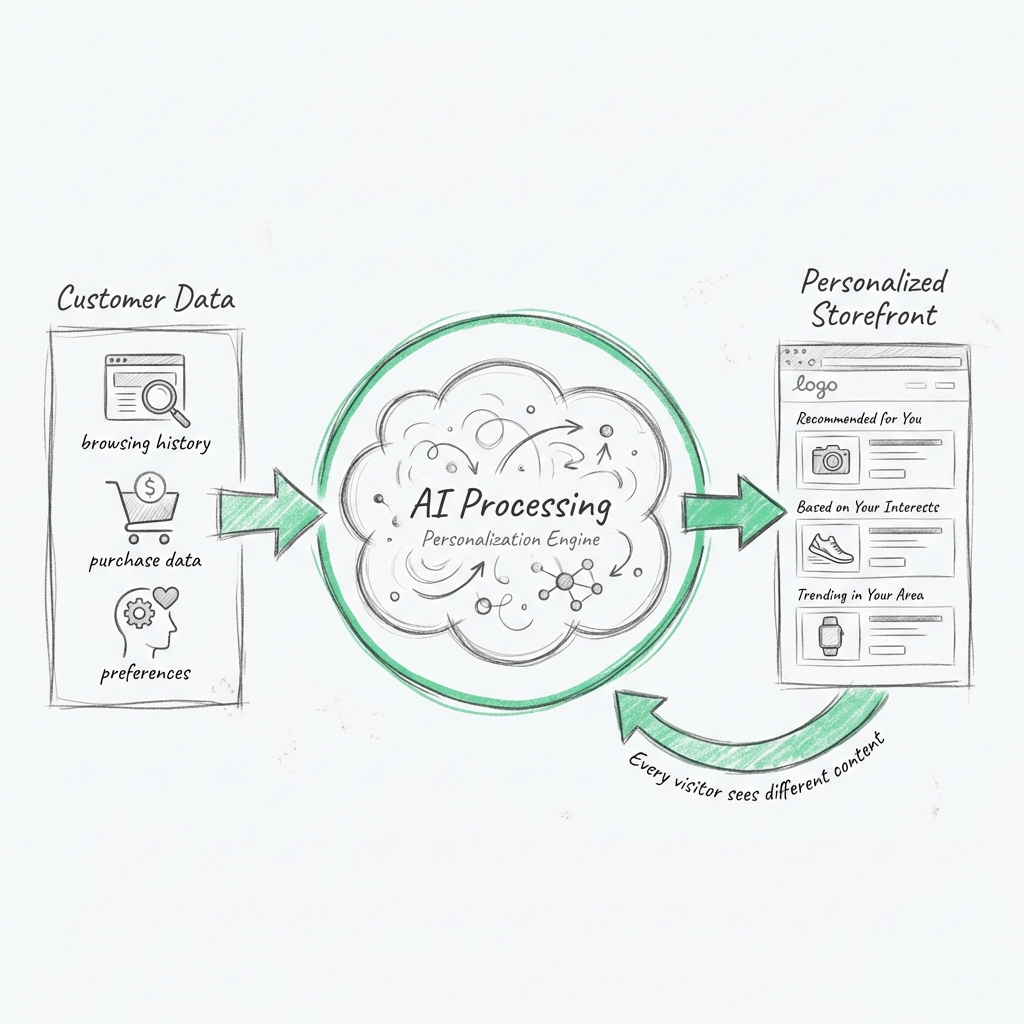
AI agents create individualized experiences beyond basic recommendation widgets.
They adjust what products appear, when emails send, what messaging resonates, and how the checkout flows. Not based on broad segments. Based on individual behavior patterns.
Typical results:
- 10-30% increase in conversion rates
- Higher average order values
- Reduced cart abandonment
BÉIS, a Shopify retailer, uses AI-powered personalization to create experiences tailored to each visitor’s behavior.
Shopping Assistance
This is where agents like Rufus operate.
Customers interact conversationally. They describe what they need in natural language. The agent searches, compares, recommends, and can complete purchases.
During Cyber Week 2025, AI agents influenced $67 billion in global sales. Retailers with branded AI agents saw sales grow 32% faster than competitors.
The Universal Commerce Protocol (UCP), launched by Shopify and Google in January 2026, standardizes how AI agents interact with stores. This means AI assistants from ChatGPT, Gemini, and Copilot can browse and buy from any participating merchant.
For Shopify stores, this capability is built in by default.
Real-World Examples
Amazon Rufus
The most visible AI shopping agent in production.
Scale:
- 250 million customers in 2025
- 38% of Black Friday shopping sessions
- 60% higher purchase completion rate
- $10 billion+ projected incremental annual sales
Rufus understands context, remembers preferences, compares products, and provides specific recommendations. It’s the baseline other agents are measured against.
Shopify Sidekick
Shopify’s built-in AI assistant for merchants, not shoppers.
Sidekick helps store owners:
- Generate product descriptions
- Analyze sales trends
- Create marketing campaigns
- Answer operational questions
The difference from earlier AI tools: Sidekick now executes actions, not just suggests them. “Create a 20% discount for first-time customers this weekend” becomes reality without manual configuration.
Agentic Storefronts via UCP
The Universal Commerce Protocol created a new category.
Shopify’s Agentic Storefronts integrate merchant products directly into AI platforms. A customer using ChatGPT, Microsoft Copilot, or Google’s AI Mode can discover and purchase products without visiting individual websites.
The AI agent does the browsing. Your products become discoverable to AI shoppers, not just human browsers.
The Technology Stack
Understanding the underlying technology helps evaluate what’s possible.
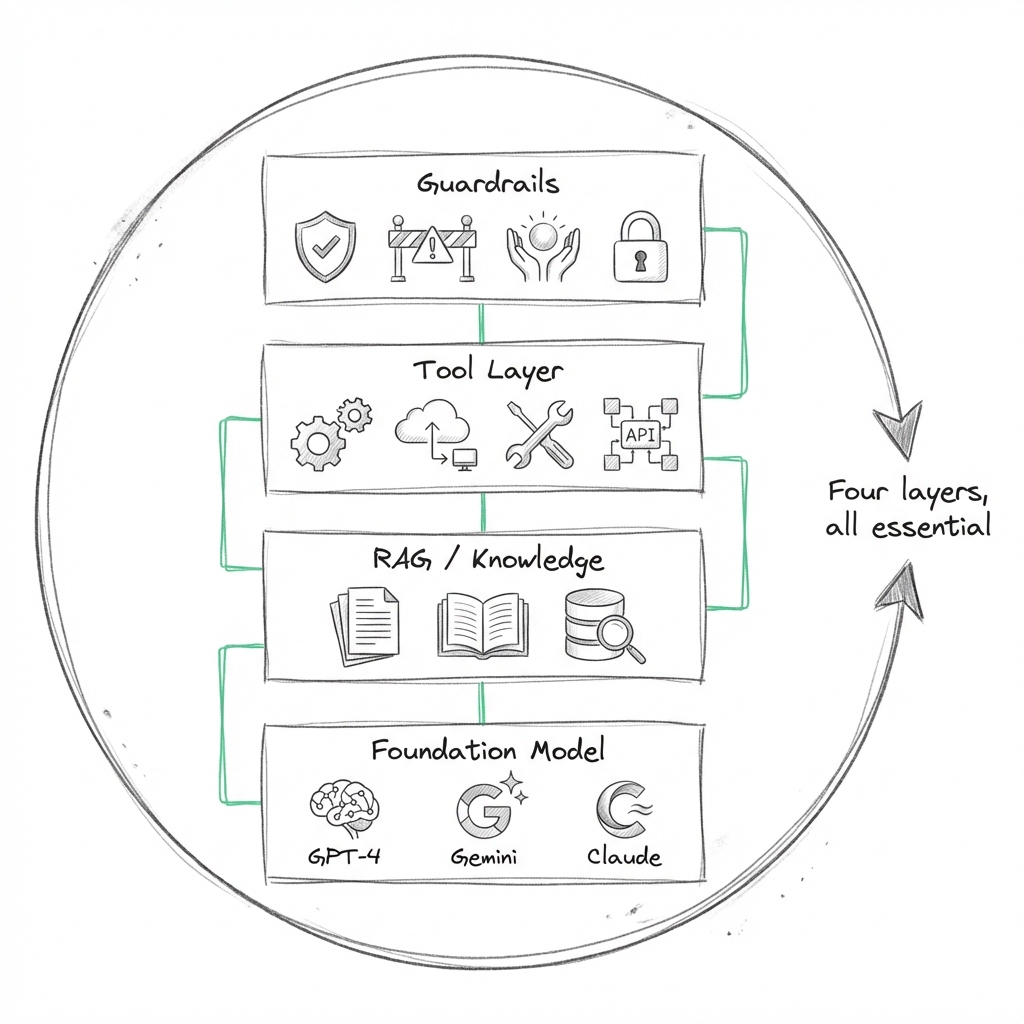
Foundation Models
LLMs power the reasoning. Current leaders:
- GPT-4 and GPT-4o (OpenAI)
- Gemini Pro and Ultra (Google)
- Claude 3 (Anthropic)
- Open-source options (Llama, Mistral)
These models continue improving rapidly. Capabilities that seemed impossible eighteen months ago are now standard.
Knowledge Systems
RAG (Retrieval-Augmented Generation) lets agents access specific knowledge without retraining.
Your product catalog, customer history, policy documents. These get stored in vector databases. When relevant, the agent retrieves and uses this information in real time.
Tool Orchestration
Frameworks like LangChain, AutoGen, and CrewAI manage how agents use tools. They handle:
- Deciding which tool to call
- Formatting requests correctly
- Processing responses
- Handling errors gracefully
Guardrails
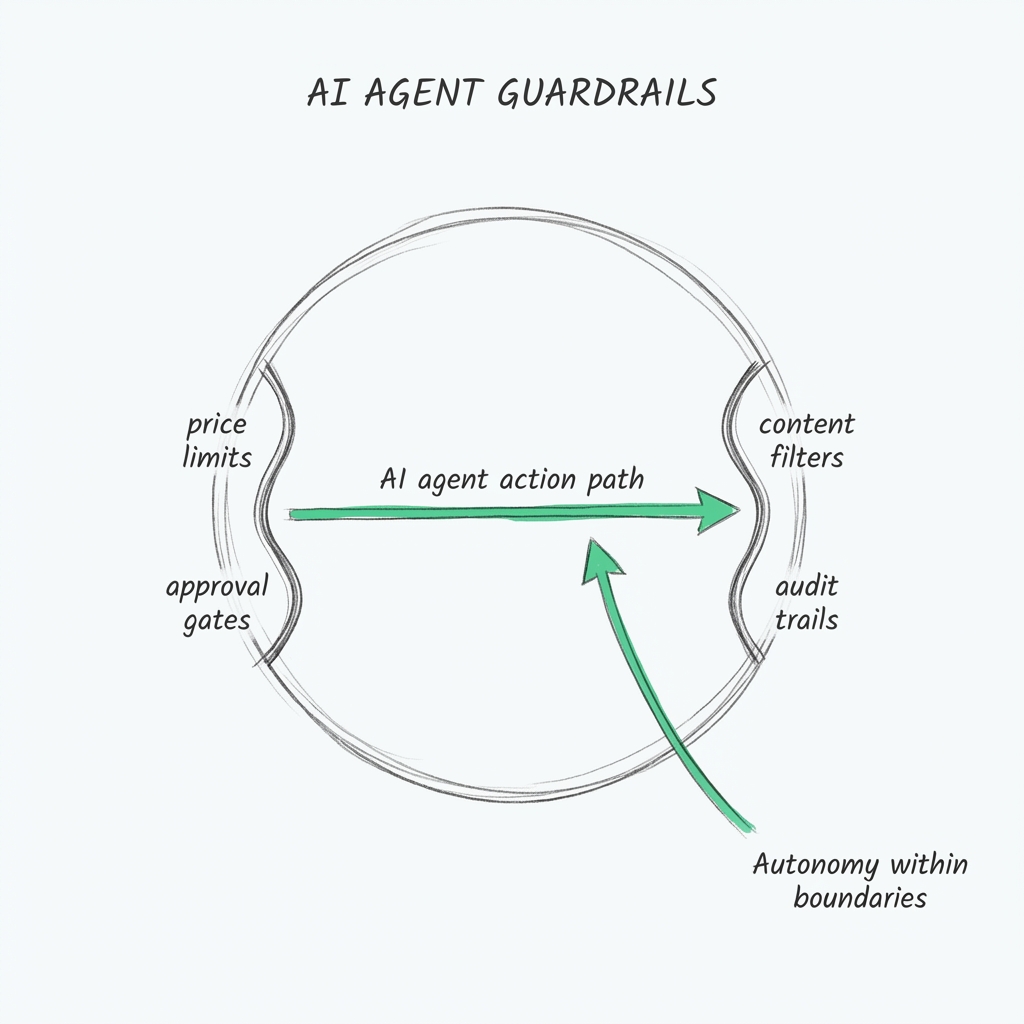
Safety systems constrain what agents can do. Price limits, approval requirements, content filters. Essential for production deployment.
Limitations and Guardrails
AI agents make mistakes.
They hallucinate facts. They misunderstand intent. They take actions that seem logical but produce bad outcomes.
Common failure modes:
- Recommending out-of-stock products
- Applying discounts incorrectly
- Providing inaccurate product specifications
- Missing nuance in customer complaints
Every production AI agent needs guardrails.
Essential guardrails:
- Price change limits (max 15% adjustment per day, for example)
- Human approval for high-value actions
- Content review before publication
- Clear escalation paths for complex issues
- Audit trails for all agent decisions
The goal isn’t full autonomy. It’s appropriate autonomy. AI handles what it handles well. Humans handle what requires judgment, empathy, or high-stakes decisions.
Getting Started
If you’re considering AI agents for your store, start small.
Phase 1: Built-in tools
Use what’s already available. Shopify Sidekick, native recommendation engines, automated email tools. Learn how AI assistance works before adding complexity.
Phase 2: Single use case
Pick one area with good data and low stakes. Customer service often works well. Run it for months and measure results.
Phase 3: Measured expansion
Add use cases based on evidence. Each new area needs the same careful approach.
The merchants who succeed treat AI agents as tools requiring oversight, not magic solutions requiring trust.
Frequently Asked Questions
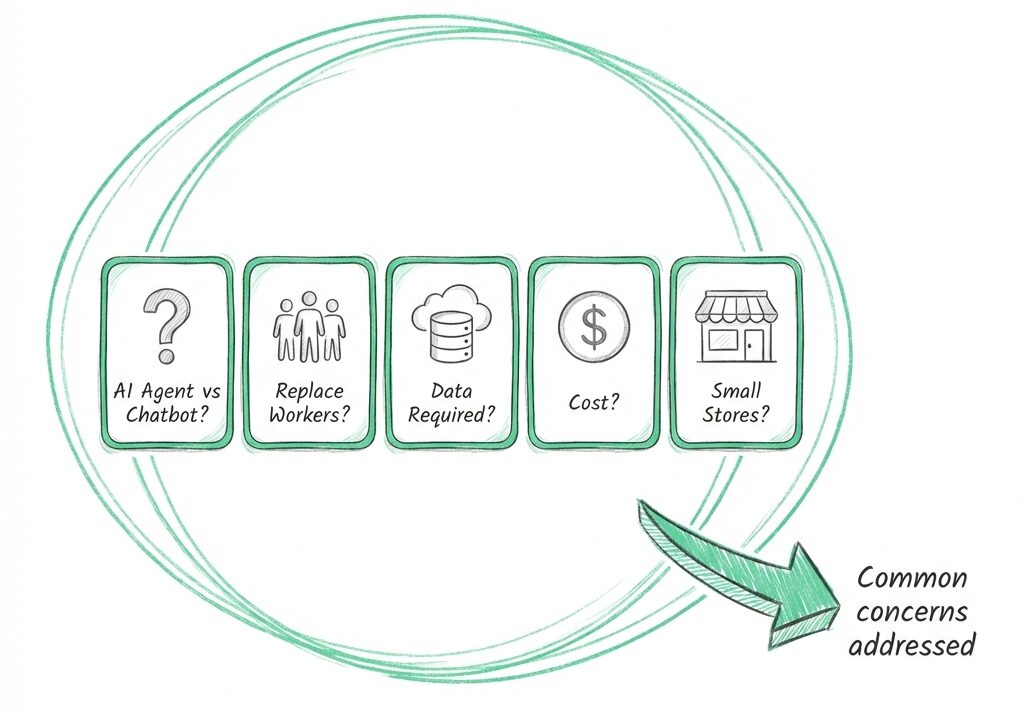
How is an AI agent different from a chatbot?
Chatbots respond to questions using scripts or keyword matching. They provide information but don’t take independent action. AI agents act autonomously. They trigger workflows, make decisions, execute transactions, and learn from results. A chatbot tells you your order shipped. An AI agent notices a delay, contacts you proactively, offers compensation, and flags the issue internally.
Do AI agents replace human workers?
Some tasks shift from humans to AI. But new tasks emerge: overseeing AI decisions, handling exceptions, training systems. Stores implementing AI agents typically redeploy staff to higher-value activities rather than reducing headcount.
What data do AI agents need?
Agents require high-quality, structured data. Product information, inventory levels, customer history, order data. Poor data produces poor results. Most implementation issues trace back to data quality problems.
How much do AI agents cost?
Costs vary by approach. Shopify Sidekick is included in standard plans. Third-party AI services typically range from $200-500/month for mid-size stores. Custom implementations cost more. The calculation is whether efficiency gains exceed tool costs.
Can small stores use AI agents?
Yes. Shopify’s built-in tools work at any scale. The difference is scope. Smaller stores should start with basic AI features while larger stores might implement custom agent workflows.
The Bigger Picture
AI agents represent a fundamental shift in how e-commerce operates.
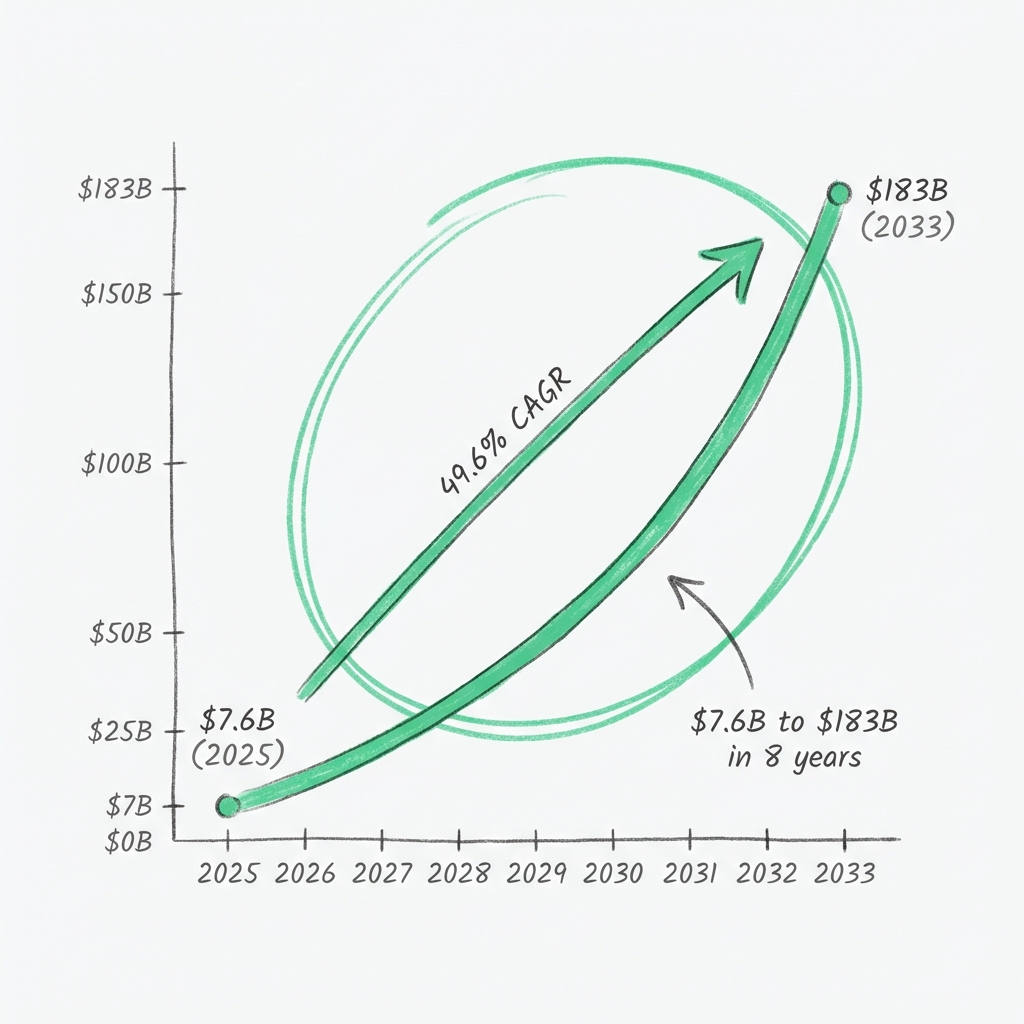
The market is growing from $7.63 billion in 2025 to a projected $182.97 billion by 2033. That’s a 49.6% compound annual growth rate. Every major platform is investing heavily.
For agentic commerce to work, AI agents need to work. They’re the technology that makes autonomous shopping possible.
The practical implication: start learning now. Experiment with existing tools. Understand the technology before it becomes mandatory.
The merchants who thrive will be those who understand AI agents well enough to deploy them appropriately. Not those who ignore them. Not those who trust them blindly. Those who find the productive middle ground.

About Akash Radadiya