On January 11, 2026, Google and Shopify announced the Universal Commerce Protocol (UCP). This open standard changes how AI assistants interact with online stores.
If you run a Shopify store, this affects you directly. UCP means customers can now discover and buy your products through AI interfaces like Google’s AI Mode, Gemini, ChatGPT, and Microsoft Copilot. They can complete purchases without ever visiting your website.
This guide explains what UCP is, how it works, and what you should do about it.

Universal Commerce Protocol Definition
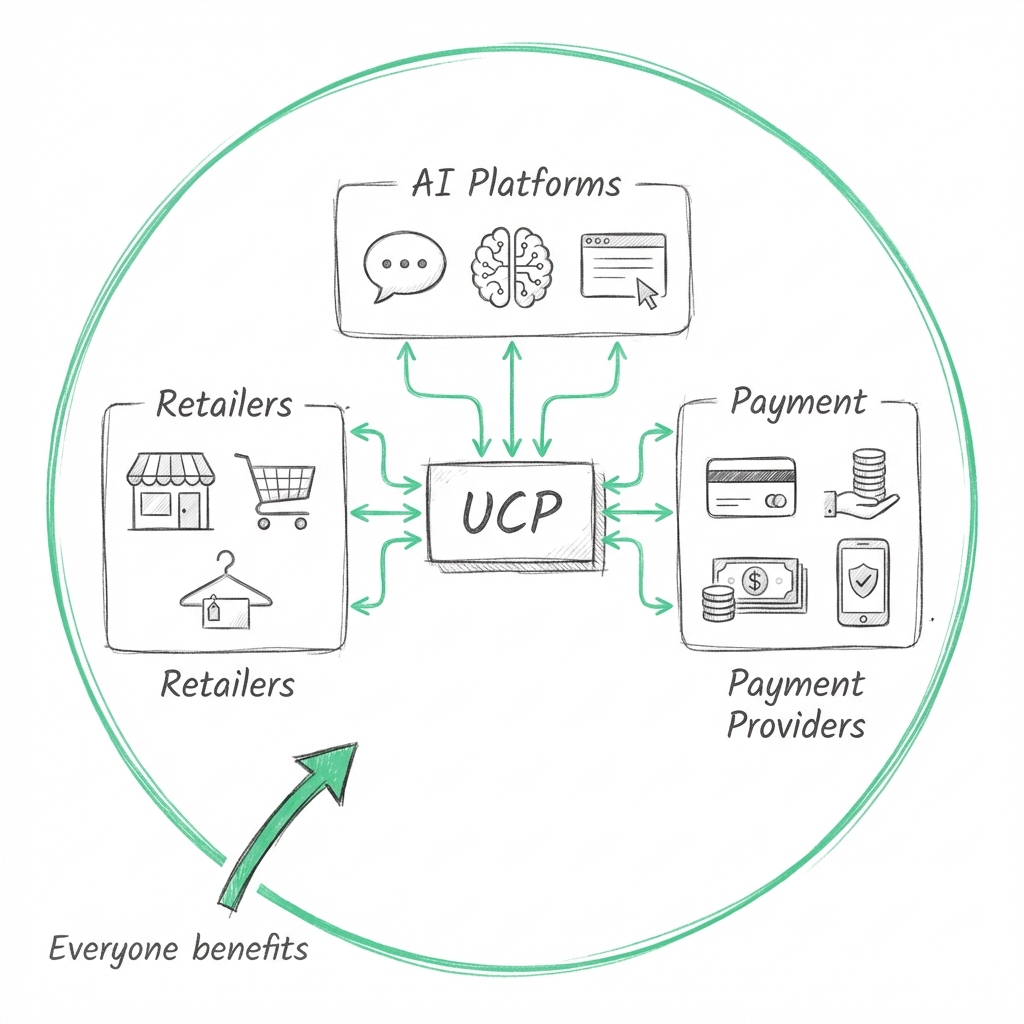
The Universal Commerce Protocol (UCP) is an open-source standard that creates a common language between AI agents, online stores, and payment systems. It enables the full shopping journey through conversational AI interfaces. This includes product discovery, checkout, and order management.
Before UCP, each AI platform needed custom integration with each store. If you wanted your products on ChatGPT, you needed one integration. For Google AI Mode, another. For Copilot, yet another.
UCP solves this problem. Any AI agent that speaks UCP can work with any store that supports UCP. Build once, work everywhere.
Who built it: Google and Shopify co-developed UCP with over 20 industry partners. These include Walmart, Target, Etsy, and Wayfair. Payment support comes from Visa, Mastercard, American Express, Stripe, and Adyen.
UCP in Action
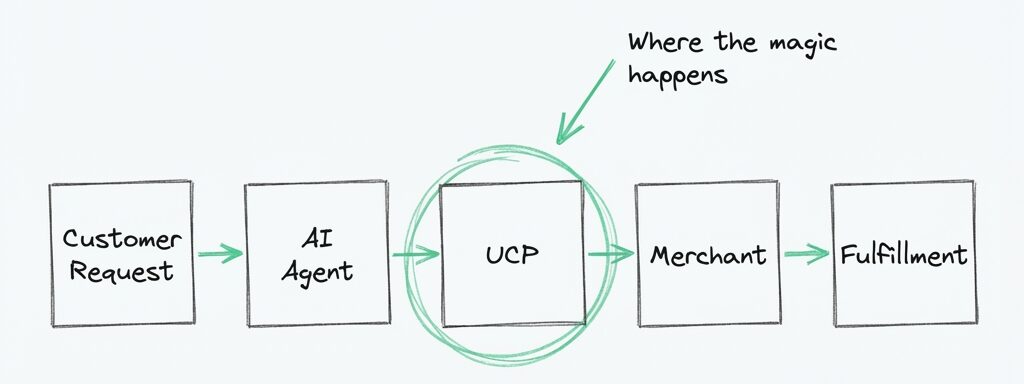
Think of UCP as a translator between AI agents and your store. Here’s what happens when someone shops through an AI assistant:
1. Customer makes a request “Find me running shoes under $150 with good arch support.”
2. AI agent searches through UCP The agent queries participating stores using standardized product data formats.
3. Results come back Your products appear alongside competitors if your data is complete and relevant.
4. Customer decides The AI presents options. Customer picks one.
5. Checkout happens in the AI interface Using UCP’s checkout capability, the purchase completes without leaving the AI assistant.
6. You fulfill the order The order appears in your Shopify admin like any other order. You remain the Merchant of Record.
Core Functions of UCP
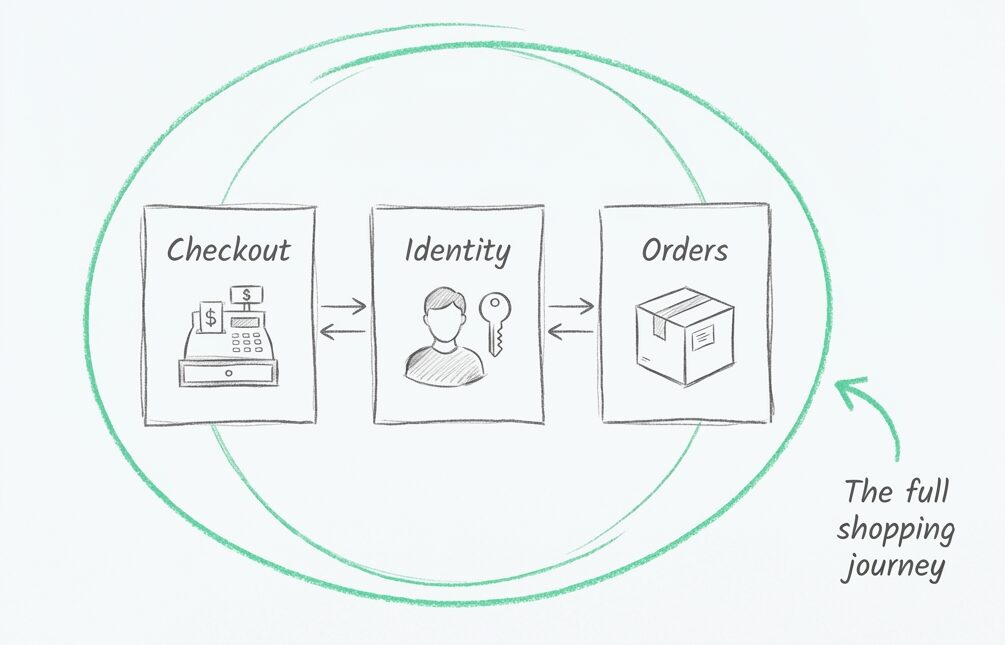
UCP handles three main things:
1. Checkout
AI agents can start and complete purchases using a standardized flow. The customer never leaves the AI interface, but you process the payment and fulfill the order.
2. Identity Linking
This connects customer accounts across platforms securely. UCP uses OAuth 2.0, the same standard behind “Sign in with Google” buttons. Customers can link their accounts once and shop across AI platforms.
3. Order Management
After purchase, AI agents can check order status, initiate returns, and handle common post-purchase questions. The customer asks their AI assistant instead of hunting through confirmation emails.
UCP Partners and Coalition
UCP isn’t a single company’s product. It’s an industry coalition.
Co-Developers
- Google (Search, AI Mode, Gemini)
- Shopify (powering millions of merchants)
Retail Partners
- Walmart
- Target
- Etsy
- Wayfair
Payment Providers
- Visa
- Mastercard
- American Express
- Stripe
- Adyen
AI Platforms
- Google AI Mode and Gemini
- Microsoft Copilot
- ChatGPT (via agentic commerce)
Why They All Joined
Each partner has something to gain:
- Retailers: New sales channel without building custom AI integrations
- Payment providers: Process transactions wherever shopping happens
- AI platforms: Offer complete shopping experiences to users
- Google and Shopify: Establish the standard before competitors do
The broad coalition signals this isn’t experimental. Major players are betting on UCP as the foundation for AI-driven commerce.
UCP Impact on Shopify Merchants
Here’s the practical impact for your store.
Good News: You’re Already In
If you’re on Shopify, UCP support is built in. Your products are automatically discoverable by AI agents. You don’t need to install anything or pay extra to participate.
The Shift: AI Agents as Customers
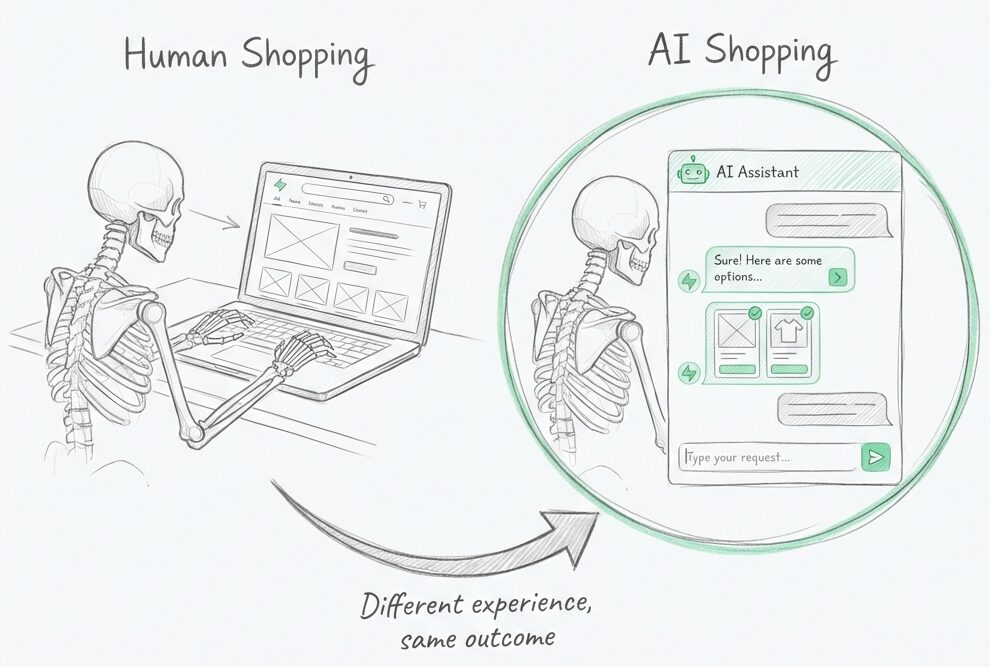
Until now, you optimized for human shoppers. This meant attractive photos, persuasive copy, and smooth checkout flows. Those still matter. But now AI agents are shopping too.
AI agents don’t see your beautiful homepage. They see structured data: product names, specs, prices, stock levels. Clean, complete data becomes a competitive advantage.
Competition Changes
In a Google search, your listing competes with others on the page. In AI shopping, the agent often presents a single recommendation or a short list. If your data is incomplete or your prices aren’t competitive, you might not make the cut.
Preparing Your Store for UCP
You don’t need to build anything to use UCP. But you can optimize for it.
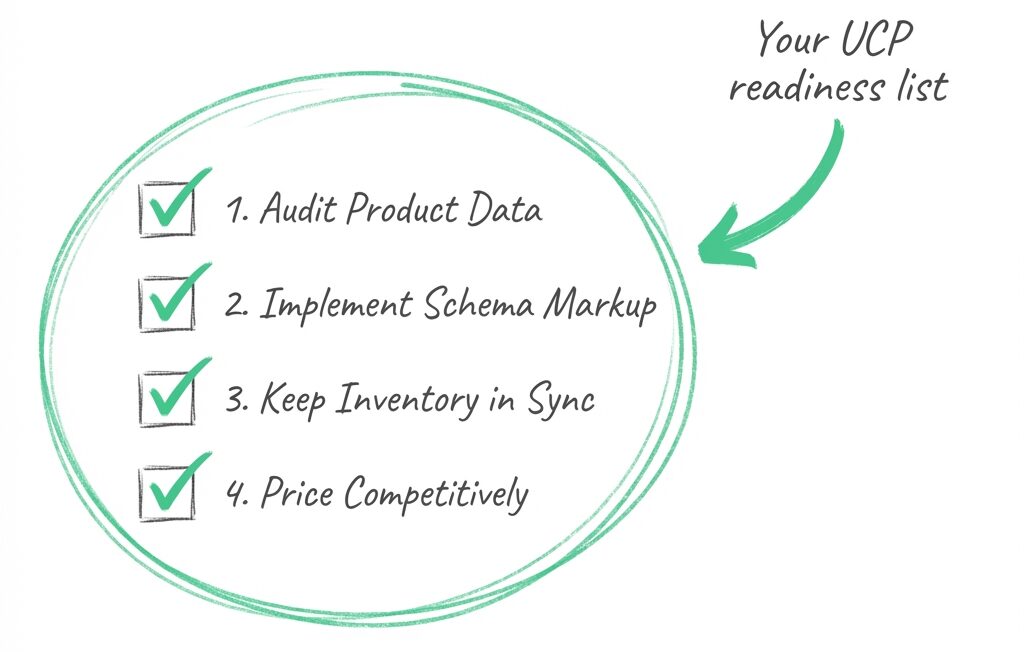
1. Audit Your Product Data
AI agents rely on structured data, not marketing copy. Check that every product has:
- Accurate titles (not keyword-stuffed)
- Complete descriptions with specs and features
- Correct variants (size, color, material)
- Up-to-date pricing
- Real-time stock levels
Missing or inconsistent data signals to AI agents that something’s off. They’ll recommend competitors instead.
2. Implement Schema Markup
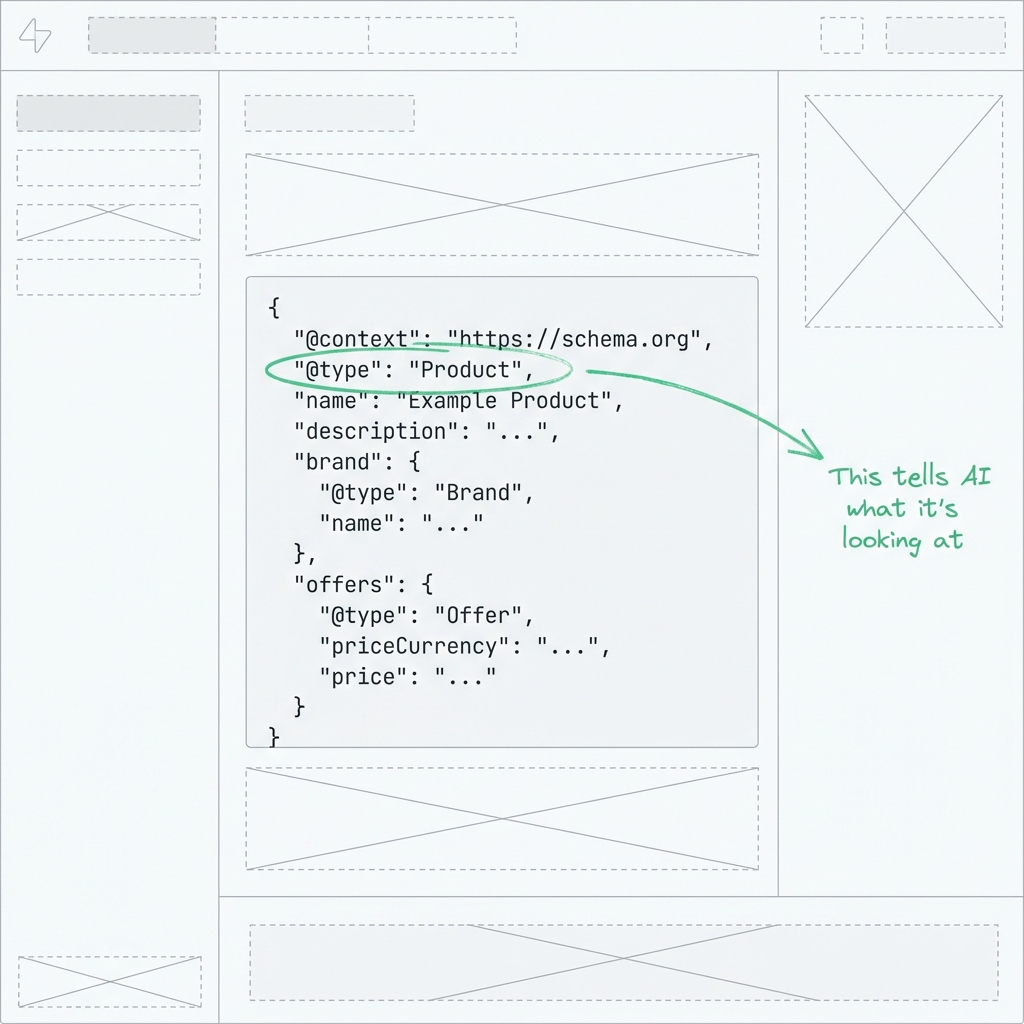
Schema markup tells AI systems what your data means. Priority schemas for e-commerce:
- Product: Core product information
- Offer: Price and availability
- AggregateRating: Customer reviews
- MerchantReturnPolicy: Return terms
Shopify themes often include basic schema, but you should review and enhance it. Tools like Super Schema Plus can automate this.
3. Keep Inventory in Sync
Nothing frustrates an AI agent (or its user) more than promoting a product that’s out of stock. Ensure your inventory syncs in real-time across:
- Your Shopify store
- Any other sales channels
- Your fulfillment systems
If you use third-party logistics or multiple warehouses, verify the sync works correctly.
4. Price Competitively
AI agents often compare prices across merchants. If you’re significantly higher than competitors without clear differentiation, you’ll be filtered out.
This doesn’t mean race to the bottom. But it does mean your pricing should be defensible when compared side-by-side.
UCP vs Other Protocols
You might hear about multiple protocols in AI commerce. Here’s how they relate:
| Protocol | What It Does | Relationship to UCP |
|---|---|---|
| UCP | Full shopping journey: catalog, checkout, orders | The main protocol |
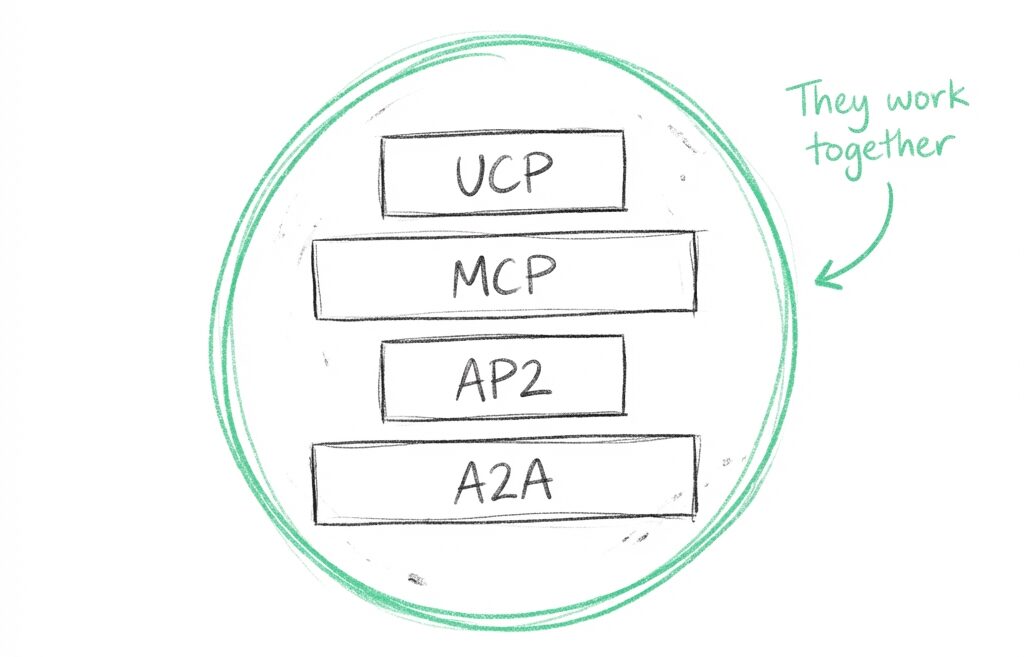
| MCP (Model Context Protocol) | How AI models connect to data sources | UCP is compatible with MCP |
| AP2 (Agent Payments Protocol) | Secure payment authorization | UCP uses AP2 for payments |
| A2A (Agent-to-Agent) | How AI agents talk to each other | UCP supports A2A |
| ACP (OpenAI’s alternative) | OpenAI’s commerce standard | Competitor to UCP |
Key point: You don’t need to choose between these. UCP is designed to work with MCP, AP2, and A2A. They’re layers in the same stack.
The exception is ACP (OpenAI’s protocol). That’s a competing standard. Time will tell if the industry consolidates around one or supports both.
UCP Shopping Surfaces
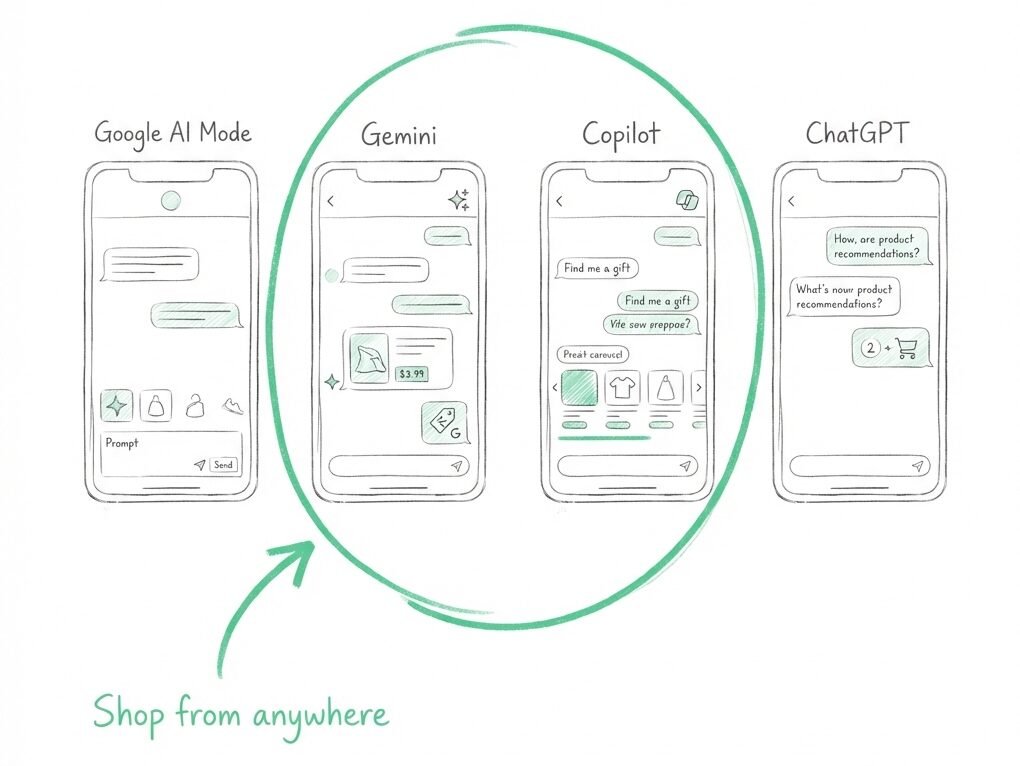
UCP enables shopping across multiple AI surfaces:
Google AI Mode
Google’s conversational search experience. Users ask questions, get AI-generated answers, and can now complete purchases without leaving Search.
Gemini
Google’s AI assistant. Shopping requests like “order more coffee pods” can execute end-to-end through UCP.
Microsoft Copilot
AI assistant built into Windows, Edge, and Microsoft 365. Now with checkout capability through UCP.
ChatGPT
Through Shopify’s Agentic Storefronts, ChatGPT users can shop products and complete purchases.
Future Surfaces
Voice assistants, in-car systems, smart home devices. Anywhere an AI agent can operate, UCP can enable commerce.
Security and Control
A common concern: Am I giving up control by letting AI agents sell my products?
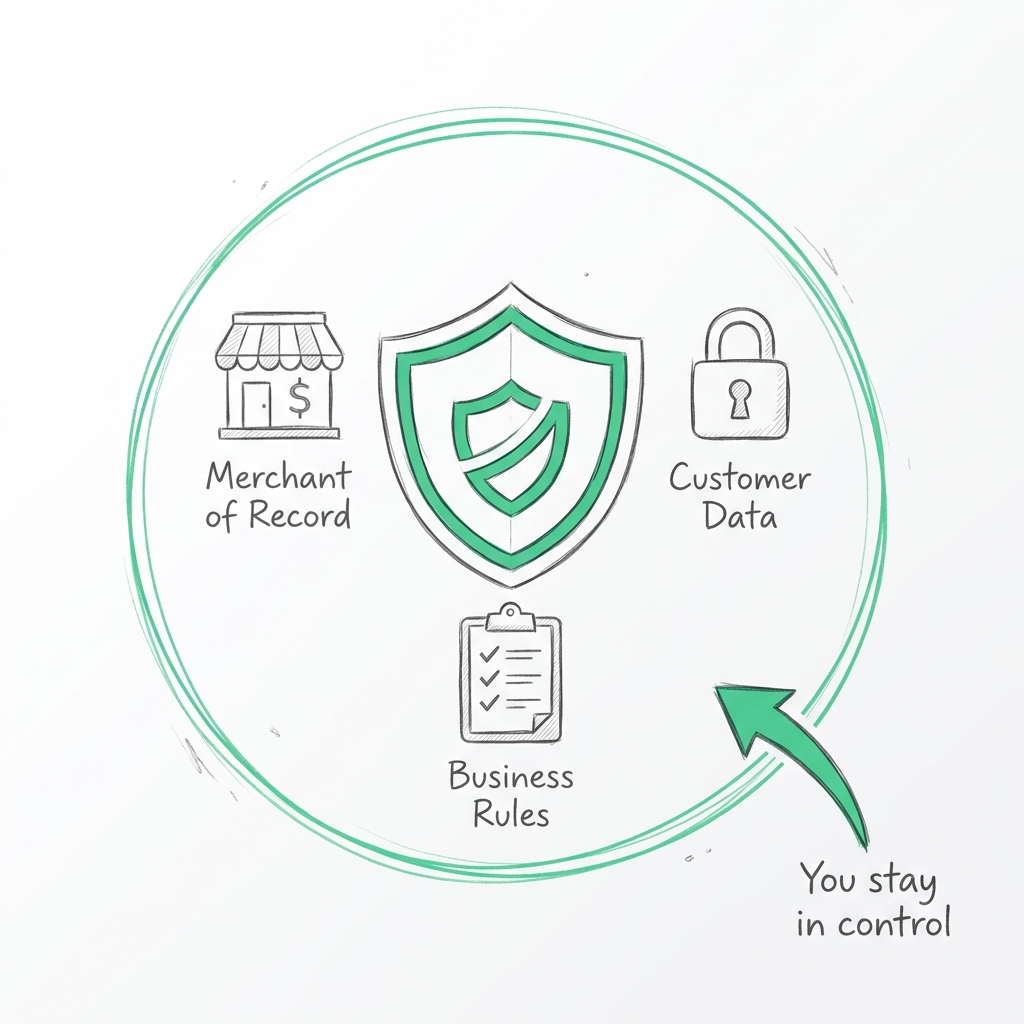
You Remain Merchant of Record
All transactions still flow through your Shopify store. You process payments, handle fulfillment, manage returns. UCP provides the interface. You run the business.
Customer Data Stays Yours
When customers buy through AI agents, the customer relationship remains with you. You get their email, order history, and can market to them.
Business Rules Apply
Your pricing, discounts, shipping rules, and inventory limits are enforced. AI agents work within your constraints, not around them.
Security Standards
UCP uses OAuth 2.0 for account linking. This is the same standard behind major login systems. For payment security, UCP uses AP2 with cryptographic proof of user consent.
Frequently Asked Questions
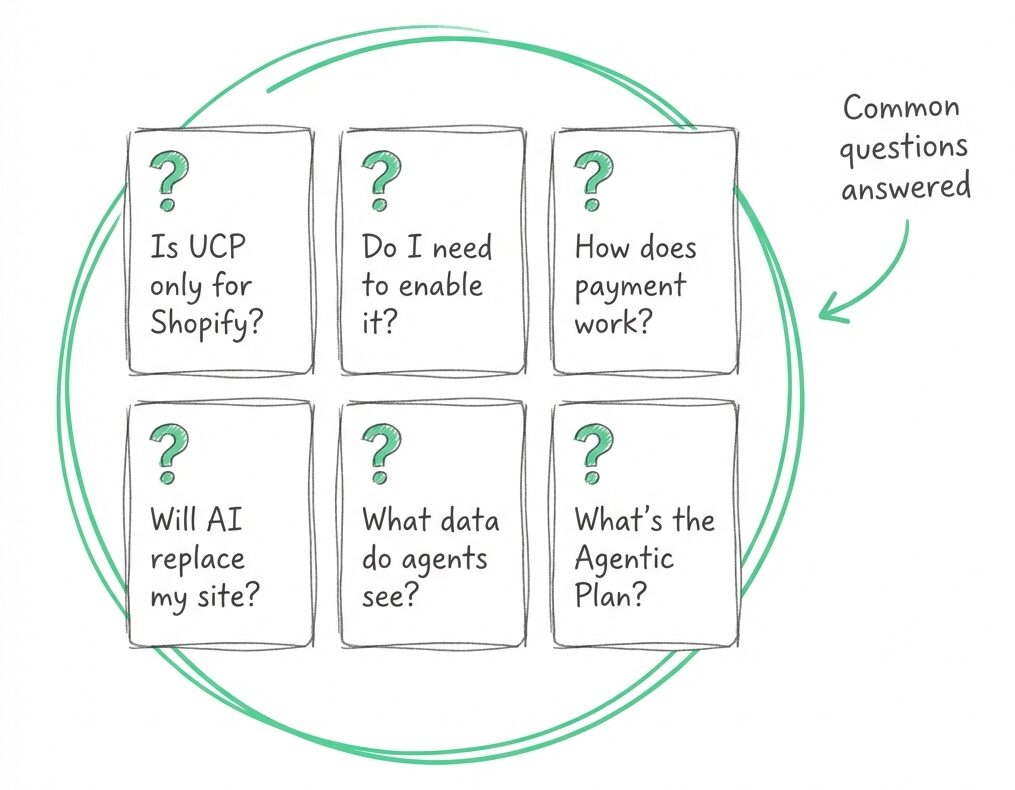
Is UCP only for Shopify merchants?
No. While Shopify co-developed UCP and has built-in support, the protocol is open-source. Any merchant or platform can implement it. Walmart, Target, and other major retailers are partners.
Do I need to do anything to enable UCP?
For Shopify merchants, UCP is enabled by default. Your products are already discoverable. The action items are about optimization: improving product data, adding schema markup, ensuring inventory accuracy.
How does payment work through AI agents?
The AI agent collects payment information and passes it to your store via UCP and AP2 (Agent Payments Protocol). Payment processing happens through your existing Shopify payments setup. You receive funds normally.
Will AI shopping replace my website?
No. Your website remains your primary channel for brand experience, content, and direct relationships. AI shopping adds a channel. It doesn’t replace existing ones. Think of it like social commerce: another place customers can buy, not a replacement for your store.
What data do AI agents see from my store?
AI agents access your product catalog (titles, descriptions, prices, variants, availability), basic store information, and structured data (schema markup). They don’t see private customer lists, internal notes, or data you don’t publish.
What about the Shopify Agentic Plan?
This is a new option for brands not currently on Shopify. They can list products in Shopify’s Catalog and sell through AI channels without migrating their entire store. It’s a way for Shopify to expand beyond current merchants.
Next Steps
UCP is live. AI agents are already shopping. Here’s your action list:
- Review product data: Ensure titles, descriptions, and variants are complete
- Check schema markup: Verify Product and Offer schemas are present
- Verify inventory sync: Confirm real-time accuracy across channels
- Monitor new traffic sources: Watch for orders from AI shopping surfaces
- Read the agentic commerce guide: Understand the bigger picture
UCP is infrastructure. Your job is to make sure your store is ready to use it.

About Akash Radadiya